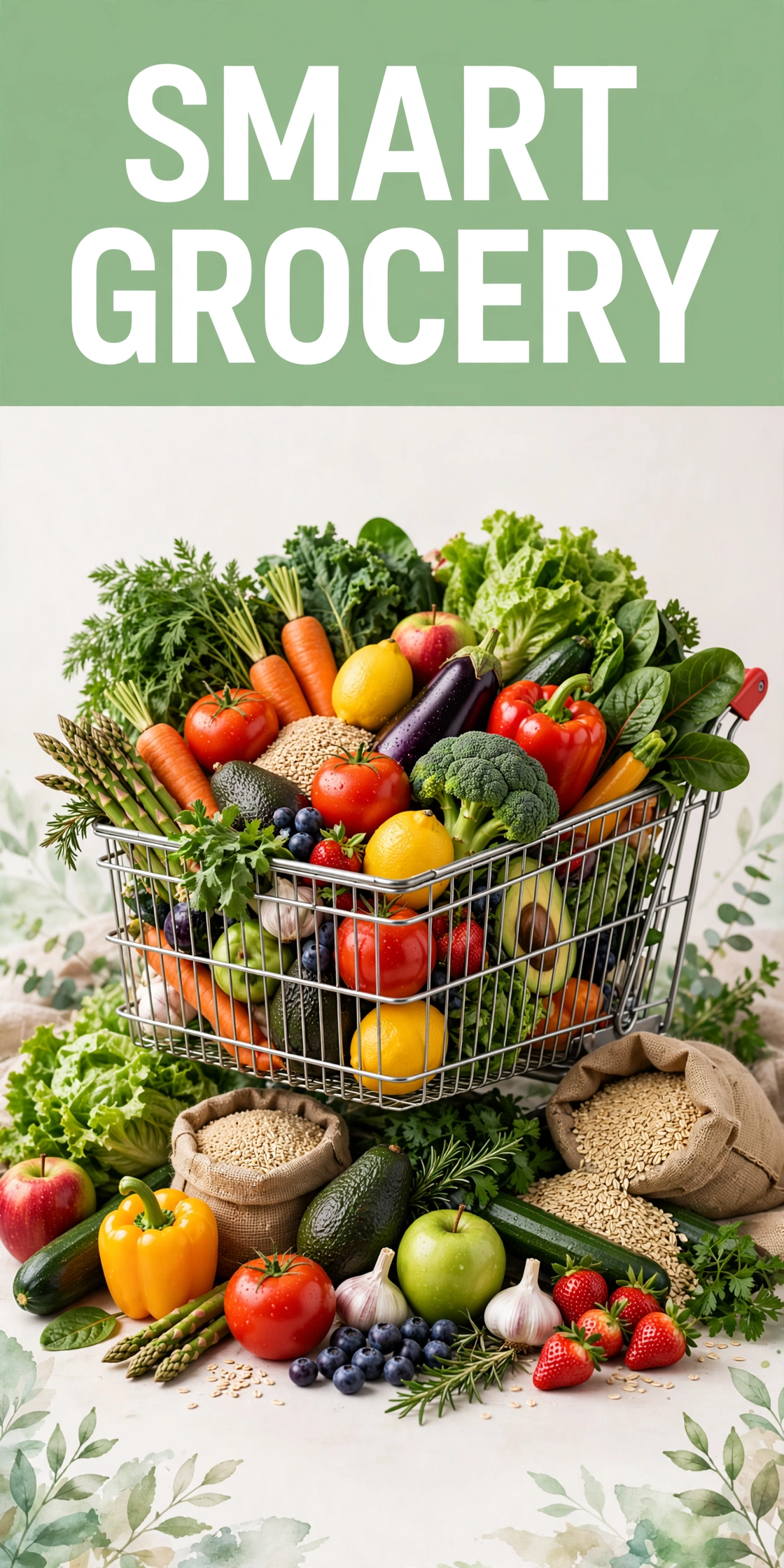
Walk into any grocery store in America and you will feel the tension before you even grab a cart. On one side of the aisle, glossy produce promises glowing health at $4.99 a pound. On the other, a box of sugary cereal and a bag of chips offer comfort at a fraction of the price. Your wallet says one thing, your health goals say another, and the checkout line feels like a courtroom where both get judged.
Here is the truth most people never hear: eating healthy does not have to cost more. In fact, the families who eat the healthiest often spend less on groceries than their junk-food-buying neighbors. How? They stopped shopping with their impulses and started shopping with a system. They plan meals instead of wandering aisles. They buy ingredients instead of packages. They know that a $1.50 bag of dried lentils becomes eight filling meals, while a $5.99 frozen dinner becomes one.
This article hands you that system: how to plan like a pro, shop the store like a strategist, dodge the psychological traps designed to drain your wallet, and think in cost-per-meal instead of price-per-package. Just practical, dollars-and-cents tactics that make your health goals and your money goals reinforce each other — starting with this week’s shopping trip.

Plan Before You Shop
The most expensive grocery habit in America is not buying organic. It is shopping without a plan. Unplanned shoppers overspend by 20 to 40 percent and throw away far more food. Planning takes thirty minutes once a week and pays for itself many times over.
Take a Pantry and Fridge Inventory
Before you write a single item on your list, open your cabinets and refrigerator and look at what you already own. Most households have a graveyard of half-used items: a bag of rice bought in January, canned tomatoes from a sale you forgot, frozen chicken thighs hiding behind the peas. Build your week’s meals around these first. This one habit alone can cut a weekly grocery bill by $15 to $25.
- Do a 5-minute “shelf sweep” every Sunday: jot down proteins, grains, and canned goods you already have.
- Photograph your fridge and pantry with your phone before shopping so you never buy duplicates.
Build a Weekly Meal Map
A meal plan is not a rigid diet. It is a simple grid: seven dinners, plus rough ideas for breakfasts and lunches. Dinners are the expensive meals, so start there. Pick 3 to 4 core dinners you already know how to cook, add 1 or 2 new recipes, and leave one night as “leftovers” or “clean-out-the-fridge” night. A family of four can comfortably feed dinner for $6 to $9 a night this way, versus $40 to $60 on takeout.
- Anchor the week on two cheap, versatile proteins — for example, a whole roasted chicken ($8 to $10) and a pot of beans ($1.50 dried).
- Schedule a “leftover night” every week — it prevents food waste and costs literally $0 extra.
Write a Disciplined Shopping List
Your list is your contract with yourself. Organize it by store section — produce, dairy, meat, pantry — so you move through the store once, efficiently, without backtracking past temptation. A disciplined list-keeper buys 80 to 90 percent list items; an impulse shopper buys half their cart off-list.
- Set a written budget at the top of the list (e.g., “$120 this week”) — a number makes tradeoffs real.
- Keep a running “need next time” list on the fridge door all week so nothing is forgotten or panic-bought.
Store Tactics That Save Real Money
Once you are inside the store, the environment is engineered to separate you from your money. These tactics turn the store’s psychology back in your favor.
Shop the Perimeter First
Fresh produce, dairy, eggs, meat, and fish live around the store’s outer walls. The center aisles are mostly shelf-stable processed products with the highest markups. Start your trip on the perimeter and fill your cart with real food first — you will naturally buy less from the center aisles because your cart (and budget) is already committed to nutritious staples.
- Fill half your cart with produce before touching any packaged item — visual fullness curbs impulse grabs.
- Treat the center aisles as a short list of destinations (oats, rice, beans, canned tomatoes), not a browsing zone.
Master Unit Pricing Math
The big number on the shelf tag lies; the small number tells the truth. Unit pricing — the cost per ounce, per pound, or per 100 count — lets you compare honestly across sizes and brands. A 32-ounce bag of oats at $4.49 ($0.14/oz) beats a 16-ounce canister at $3.99 ($0.25/oz) every time, even though the bag “costs more.” Larger is not always cheaper, though — check every time.
- Compare the unit price, never the sticker price, when choosing between sizes.
- Store brands routinely match name brands on nutrition at 20 to 40 percent lower cost — compare ingredient lists, not logos.
Buy Seasonal, Frozen, and Store Brand
A strawberry in January is a luxury import; in June it is practically free. Seasonal produce can cost half as much as out-of-season equivalents and tastes better. Frozen fruits and vegetables are picked at peak ripeness and flash-frozen — nutritionally equal to fresh, often $1 to $2 cheaper per bag, and they never rot in your crisper drawer. Store-brand frozen vegetables at $1.00 to $1.25 a bag are one of the best deals in the entire store.
- Learn your region’s cheap months: berries in summer, squash and apples in fall, citrus in winter.
- Use store-brand staples — canned beans ($0.89 vs $1.49 name brand), oats, rice, peanut butter — for identical nutrition.
Use Bulk Bins and Loyalty Programs Wisely
Bulk bins let you buy exactly the amount you need — a cup of quinoa for a recipe instead of a $6 bag that goes stale. Spices from bulk bins cost pennies per teaspoon versus $4 to $6 per jar. Store loyalty programs and apps are worth the 60-second signup: digital coupons routinely knock $10 to $20 off a $120 trip, and many stores offer a free item weekly.
- Buy spices, grains, and nuts from bulk bins in small quantities — freshness plus savings.
- Stack strategically: store sale + digital coupon + loyalty price is where $3 items become $1 items.

Avoiding Junk-Food Traps
Grocery stores employ teams of psychologists. End caps, checkout racks, and “health” labels are designed to trigger impulse buys of high-margin processed food. Recognizing the tricks is the first step to beating them.
Decode End Caps and Checkout Psychology
End caps — those displays at the end of each aisle — look like deals but are usually paid placements, not discounts. Items there can cost more per unit than the same product in its regular aisle spot. The checkout lane is the final ambush: candy, chips, and sodas placed exactly where your willpower is lowest after 40 minutes of decision-making.
- Treat every end cap as advertising, not a sale — verify the price against the regular shelf.
- Use self-checkout when possible — fewer checkout displays, faster exit, less temptation time.
Never Shop Hungry (or Tired)
Hunger is the most expensive shopping companion. A hungry shopper buys more calories, more processed snacks, and more “just in case” extras. Tiredness works the same way — decision fatigue at 7 p.m. after work makes the frozen pizza look like genius. Eat a real meal or at least a protein-rich snack (a handful of nuts, an apple with peanut butter) within an hour before shopping.
- Keep an emergency snack in your bag or car for unplanned store trips.
- Bring a water bottle — thirst masquerades as hunger and drives snack-aisle detours.
See Through Marketing Labels
“Natural,” “low-fat,” “gluten-free,” and “made with real fruit” are marketing terms, not health certifications. Low-fat products often replace fat with sugar; “natural” has no regulated definition from the FDA for most foods; a “veggie” chip can contain more sodium and fat than a potato chip. These labels routinely add a 30 to 100 percent price premium for no nutritional benefit.
- Read the nutrition facts panel, not the front of the package — check sugar, sodium, and fiber per serving.
- Do not pay extra for “health halo” claims; a plain bag of frozen broccoli beats a $5.99 “superfood blend.”
Count the True Cost of Ultra-Processed Snacks
A $4.99 bag of chips feels cheap until you do the math: it contains about 8 servings, vanishes in two sittings, and leaves everyone hungry again in an hour. Compare that to $4.99 of popcorn kernels — roughly 60 servings of a whole-grain, high-fiber snack. Ultra-processed snacks are engineered to be overeaten, which means their true cost per satisfying snack is far higher than the sticker suggests.
- Price snacks per satisfying portion, not per package — popcorn kernels, peanuts, and bananas win by miles.
- Remember the health ledger too: constant ultra-processed snacking is linked to weight gain and poorer diet quality.
Cost-Per-Meal Thinking
The smartest budget shoppers do not ask “what does this cost?” They ask “what does this meal cost?” A $12 bag of chicken breasts that makes six dinners ($2.00 per dinner in protein) beats a $5 frozen meal that feeds one person once. Cost-per-meal thinking turns grocery shopping into an investment strategy.
Batch Cooking: Cook Once, Eat Three Times
Batch cooking means intentionally cooking double or triple portions. A big pot of chili on Sunday becomes Monday’s lunch and Wednesday’s dinner. A sheet pan of roasted vegetables stretches across grain bowls all week. The economics are unbeatable: cooking 8 servings of chicken-and-rice costs about $10 total ($1.25 per serving), while buying those same 8 servings as takeout costs $80 or more.
- Pick one “batch day” (Sunday works for most people) and cook 2 big items: one protein, one grain or stew.
- Freeze half of every batch immediately in labeled portions; future-you gets a free healthy “frozen dinner.”
Stock the Versatile Pantry Staples
A handful of cheap staples can generate dozens of different meals. Dried beans and lentils ($1.00 to $1.80 per pound, 10+ servings), rolled oats ($3.50 for 30+ breakfasts), long-grain rice ($0.70 per pound in large bags), eggs ($2.50 to $4.00 per dozen, nature’s cheapest complete protein), canned tomatoes, and peanut butter form the backbone of budget-healthy eating. A well-stocked pantry means you can always make a meal without an emergency store run.
- Keep at least 5 of the “big 7” always on hand: beans/lentils, oats, rice, eggs, canned tomatoes, peanut butter, frozen veg.
- Eggs are the budget protein champion — hard-boil a dozen on batch day for grab-and-go snacks all week.
Repurpose Leftovers Creatively
Leftovers are not repeats — they are ingredients. Roast chicken becomes chicken tacos, then chicken soup from the bones. Rice becomes fried rice. Roasted vegetables become omelet filling or soup. This “cook once, transform twice” approach cuts the effective cost of every meal and keeps the menu interesting. Americans throw away roughly 30 percent of purchased food; every repurposed leftover is money rescued from the trash.
- Plan transformations in advance: “Sunday roast chicken → Tuesday tacos → Thursday soup.”
- Embrace “bowl night”: grain + protein + roasted veg + sauce uses up odds and ends deliciously.
A Sample Week of Budget-Healthy Meals
Theory is nice, but a concrete plan with real numbers proves the system works. Below is a realistic one-week meal plan for one adult, built from the tactics above.
The 7-Day Meal Map
Breakfasts repeat (oatmeal with banana and peanut butter, five days; eggs and toast, two days). Lunches are batch-cooked (big pot of lentil soup covers four lunches; leftover dinners cover the rest). Dinners rotate through five core meals with two leftover nights. Nothing fancy — just real food, cooked simply.
- Monday: lentil soup with carrots and celery; Tuesday: chicken-and-rice bowls with frozen broccoli
- Wednesday: black bean tacos with cabbage slaw; Thursday: leftover lentil soup + toast
- Friday: egg fried rice with peas and carrots; Saturday: pasta with canned tomato sauce and spinach
- Sunday: roast chicken thighs with roasted potatoes and frozen green beans (leftovers become next week’s lunches)
The Grocery List With Rough Cost Math
Here is what the week costs at typical US prices (2026 averages, store brand where possible). Oatmeal ($0.25/day × 5 = $1.25), bananas ($0.69/lb, about $2.00), peanut butter (pantry), eggs ($3.50/dozen), bread ($2.50), dried lentils ($1.50), carrots/celery/onions ($4.00), canned tomatoes ($0.89 × 2 = $1.78), chicken thighs ($0.99/lb × 3 lbs = $2.97), rice (pantry, ~$1.00 worth), frozen broccoli and green beans ($1.25 × 3 = $3.75), black beans dried ($1.50), tortillas ($2.00), cabbage ($0.80), frozen peas and carrots ($1.25 × 2 = $2.50), pasta ($1.25), frozen spinach ($1.25), potatoes ($0.80/lb × 3 = $2.40).
- Pantry staples used (oats, rice, peanut butter, spices): roughly $4.00 of value
- Fresh + frozen total: about $38 to $42 for the entire week — roughly $5.50 to $6.00 per day, under $2.00 per meal
- Compare: one week of fast-food lunches alone ($10 × 5 = $50) costs more than this entire week of groceries
Where the Savings Compound
The weekly savings are just the start. Cooking at home typically costs one-third to one-half of eating out for equivalent nutrition. A household that replaces five $12 takeout meals a week with home cooking saves around $200 a month — $2,400 a year. Add reduced food waste (the average American family wastes over $1,500 of food yearly) and the system can realistically free up $3,000 to $4,000 a year while improving diet quality.
- Track one month of “before” spending (groceries + dining out) so the savings are visible and motivating.
- Reinvest some savings in quality upgrades: better olive oil, fresh herbs, or wild-caught fish once a week.
Frequently Asked Questions
Is organic worth the extra money?
For most budget-conscious shoppers, no — not as a blanket rule. The nutritional differences between organic and conventional produce are small, and conventional fruits and vegetables are vastly healthier than no fruits and vegetables. A smarter approach: buy conventional produce freely, and if you want to prioritize, spend the organic premium only on the items you eat most often or eat with the skin on, like apples and spinach. Never let the organic price tag talk you out of produce altogether — a $1.00 conventional broccoli beats a skipped $3.50 organic broccoli every time.
Are frozen vegetables as nutritious as fresh?
Yes — and sometimes more so. Frozen vegetables are typically picked at peak ripeness and flash-frozen within hours, locking in vitamins. “Fresh” produce, by contrast, may spend a week in transit and storage losing nutrients. Frozen options cost $1.00 to $1.50 per bag, last months without waste, and work perfectly in soups, stir-fries, and grain bowls. Keep both: fresh for salads and snacking, frozen as your reliable, waste-free backup.
What are the cheapest healthy proteins?
Eggs (about $0.25 to $0.35 each), dried beans and lentils ($0.10 to $0.20 per cooked serving), canned tuna ($1.00 to $1.50 per can), chicken thighs ($0.99 to $1.49 per pound), peanut butter, and plain Greek yogurt bought in large tubs. A week of protein for one person can cost under $12 using these. Rotate them across meals — lentil soup Monday, egg fried rice Friday — and you will hit protein needs without the $6-per-pound chicken breast habit.
How do I keep meal-prepped food safe?
Follow the 2-hour rule: refrigerate cooked food within two hours. Store prepped meals in airtight containers and eat refrigerated leftovers within 3 to 4 days; freeze anything you will not eat by day four. Reheat to steaming hot (165°F) throughout. When in doubt, throw it out — a $3 container of questionable leftovers is never worth a bout of food poisoning. Label containers with the date so “mystery tub” situations never happen.
Can I eat healthy with kids on a budget?
Absolutely — kids are often cheaper to feed well than adults think. Build meals around foods kids already accept: oatmeal, peanut butter sandwiches on whole-grain bread, bean-and-cheese quesadillas, pasta with tomato sauce, banana “ice cream” (frozen bananas blended). Involve them in one weekly cooking task — washing vegetables, stirring soup — and they become far more willing to eat the result. The batch-cooking system shines here: one pot of food feeds small appetites for days at a fraction of the cost of kid-marketed packaged snacks.
How much should a healthy grocery budget be?
A reasonable US benchmark for one adult cooking mostly at home is $50 to $75 per week, or $200 to $300 per month. A family of four typically lands between $180 and $280 per week depending on location. If you are spending far above that, the meal-planning and cost-per-meal tactics in this article usually close the gap within a month. Track spending for two weeks first — most people are shocked to find 20 to 30 percent of their food budget going to snacks, drinks, and impulse buys rather than real meals.

Eating well on a budget is not about deprivation, extreme couponing, or settling for bland food. It is about running your kitchen like a smart, small operation: plan the week, shop with a list, buy ingredients instead of packages, cook in batches, and waste almost nothing. Each tactic saves a few dollars; together they transform both your grocery bill and your plate.
Start this week with just three moves: do a pantry inventory before you shop, write a real list with a budget number on top, and batch-cook one big pot of something on Sunday. You will spend less than you expect, eat better than you have in months, and wonder why you ever thought healthy eating was a luxury. Your health and your wallet were never opponents — they were teammates waiting for a game plan.
The content on Knowlix is for informational purposes only and is not medical advice. Always consult a qualified doctor for health concerns.
Sponsored